
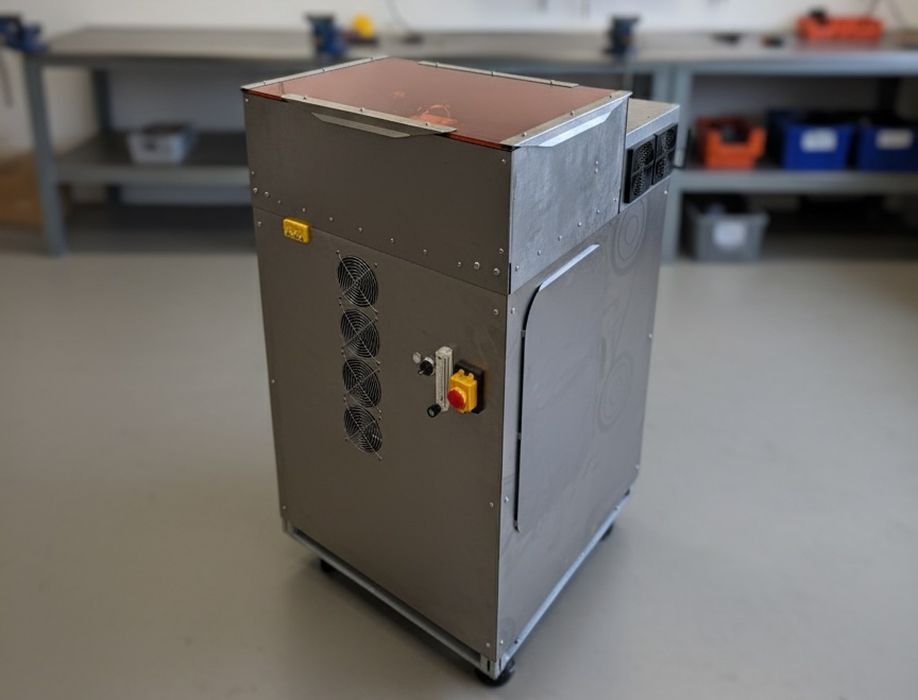
An interesting Kickstarter campaign has launched a desktop metal 3D printer, the Metal 1.0.
Metal 3D printing has been around for many years, but it is not widely used due to the expense required. This is mostly due to the nature of the popular LPBF process, which is a powder-based approach.
The presence of powder implies all kinds of special handling, especially because a) metal exposed to oxygen causes oxidation, and b) some powdered metals are explosive. Metal parts made typically are for production end use, meaning they must meet a number of quality standards and regulatory certifications. All of this drastically escalates the price to perform LPBF metal 3D printing.
The Metal 1.0 is a desktop LPBF device.
It’s a rather straightforward design, which you can see fully described in this short video:
As you might suspect, the Metal 1.0 has a small build volume: 128 x 100 mm (cylindrical build volume). There is an option to get a “stretch” machine that has a 128 x 150 mm build volume, but again, that is still pretty small.
That said, the Metal 1.0 does include a 60W diode laser that can fuse metal powder. 60W is a very low energy level, so I suspect the print speed on this machine will be extremely slow. Industrial machines, for reference, typically use 500-1000W lasers. Metal Base, the company behind Metal 1.0, said the system will support printing 316L, Inconel 718, and bronze powders. They also say they are working on copper, which has been quite challenging for other LPBF systems.
What about that oxidation issue? Won’t this powder be exposed to the air and become contaminated? The Metal 1.0 system does have an air pump to remove air from the build chamber and a way to replace it with nitrogen. This removes the oxygen.
While you can supply nitrogen by hooking up a commercially obtained tank of N2, the Metal 1.0 has an interesting option: an onboard nitrogen generator. In other words, the Metal 1.0 can make its own nitrogen. However, that’s a €1200 (US$1400) option.
Something that isn’t answered is how the powder gets in and out of the Metal 1.0. More expensive systems have “no exposure” containers that can deliver powder into the LPBF system without any oxygen exposure. In the Metal 1.0, I am not sure how that happens.
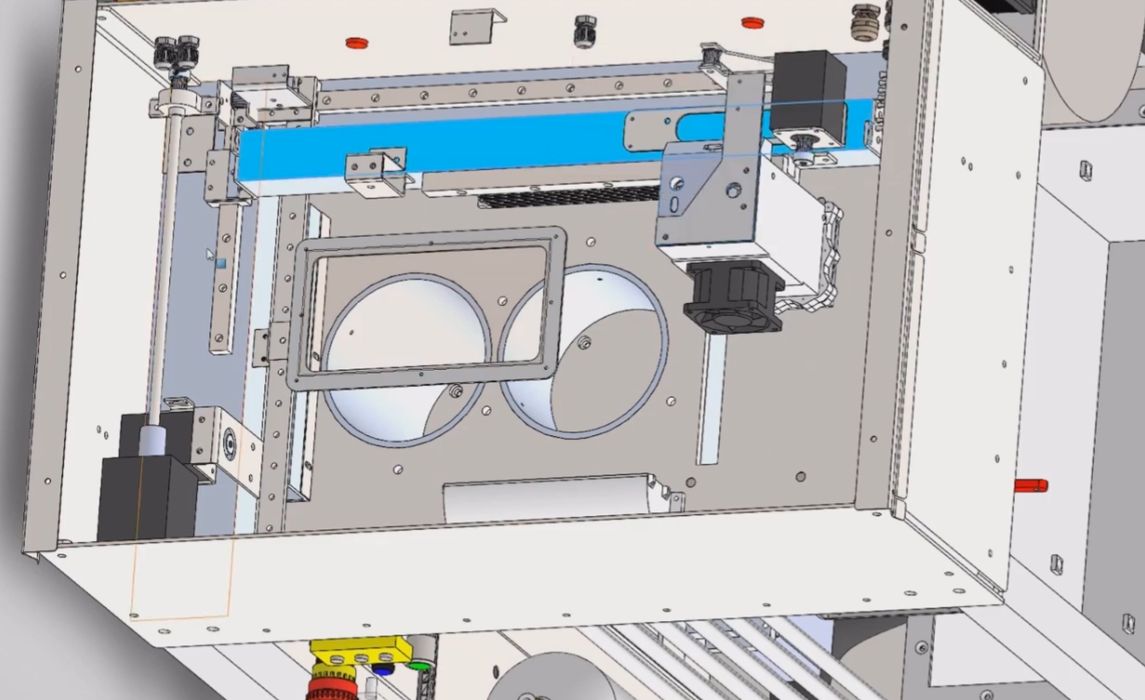
For the motion system, which moves the laser above the build area, the system uses common Klipper firmware with a regular control board. Interestingly, the Metal 1.0 does not use a galvanometric approach for the laser: the laser appears to be moved directly above the print area. This means that the laser dot will be highly consistent in shape, as opposed to one tilted by a galvanometric mirror.
The Metal 1.0 is shipped as a kit that must be assembled. It does not appear to be too complex, so most tech-savvy buyers should be able to get this system working. It’s not clear how long the assembly would take, but it’s likely more than your typical desktop 3D printer.
This is a pretty basic LPBF system, as you might expect. But the main feature is the price.
The Metal 1.0 is priced, at least for the launch campaign, at only €8500 (US$9840). This is far, far below the cost of industrial metal 3D printers, and even below some of the lower-cost systems, such as those from Xact Metal.
I must also mention that this is a Kickstarter campaign, and there has been a series of notorious campaign failures, with buyers losing their investments. Will this be another one? There’s no way to know, but consider that the company is only two years old and has, as far as I know, never delivered a product. I also noticed that the picture of the Metal 1.0 posted on their website (and shown at the top) appears to have been generated by AI: the filename is “gemini_generated_image_n9yauzn9yauzn9ya-high.png”. It could be that they set up the website long before they had the printer fully built, but why don’t they publish a more recent actual image?
It’s not clear to me whether this could be a successful venture. There is clearly an audience for a low-cost metal system, with many businesses effectively locked out of LPBF due to the costs. However, doing metal 3D printing involves a lot more than just the printer. There are material handling considerations, quality controls, job setup complications, post-processing, and a lot more to be concerned about.
If small businesses are able to tackle those challenges, the Metal 1.0 might be an interesting option.
Via Kickstarter and Metal-Base
