Sponsors


Recommended
  • Rule 34
    Rule 34
    by Charles Stross

    Stross delves into a possible future where 3D printers become commonplace - and explores the problems that could result. 

  • Printing in Plastic: Build Your Own 3D Printer (Technology in Action)
    Printing in Plastic: Build Your Own 3D Printer (Technology in Action)
    by James Floyd Kelly, Patrick Hood-Daniel
  • 3Dconnexion SpaceNavigator SE (Standard Edition) 3D Navigation Device USB ( 3DX-700028 )
    3Dconnexion SpaceNavigator SE (Standard Edition) 3D Navigation Device USB ( 3DX-700028 )
    3D Connexion
  • The Homebrew Industrial Revolution: A Low-Overhead Manifesto
    The Homebrew Industrial Revolution: A Low-Overhead Manifesto
    by Kevin A. Carson
  • Mastering Blender
    Mastering Blender
    by Tony Mullen
  • Kindle Wireless Reading Device (6
    Kindle Wireless Reading Device (6" Display, Global Wireless, Latest Generation)
    Amazon.com
  • Blender 3D 2.49 Incredible Machines
    Blender 3D 2.49 Incredible Machines
    by Allan Brito
  • Makers
    Makers
    by Cory Doctorow
  • 3Dconnexion SpacePilot PRO - 3D motion controller - 31 button(s) - wired - USB
    3Dconnexion SpacePilot PRO - 3D motion controller - 31 button(s) - wired - USB
    3D Connexion

Entries in building (20)

Tuesday
Jan312012

North America's Largest 3D Print?

Everyone asks how big can you print, but we have a group trying to print something truly massive. JF Brandon of Vancouver, Canada wants your help to print a gigantic version of famed 3D designer Bathsheba Grossman's "Rygo" for outdoor installation at Gropp’s Gallery of Vancouver.
 
The Rygo is an algorithmic design - generated mathematically rather than modeled in a conventional sense. It's smooth surface somehow evokes a visual pattern yet retains irregularity. This design has been (and still is) offered for sale by i.Materialise's 3D print service as a jewelry item.
 
You won't want to hang the proposed version around your neck, however. 
 
Brandon's proposal is to use the Italian D-Shape 3D printer to produce a massive 2 meter tall version of the Rygo. D-Shape has previously been used to produce outdoor sculptures in concrete and is completely appropriate for this application. 
 
Obviously this print will be expensive and thus Brandon seeks your assistance via IndieGoGo. To achieve the necessary USD$16,000, you're asked to donate to the project. Special offers are available for a variety of donation levels, ranging from a USD$1 "thank you" to a smaller versions of the Rygo and even some D-Shape prints.  
  
Wednesday
Jan252012

Awesome Possibilities with 3D Printed Concrete

A provocative article on Construction Digital discusses the idea of matching 3D printing with modern construction. As anyone who wanders through big cities these days knows, the design of buildings is increasingly radical and complex. These amazing designs are wonderful to look at and work within, but they are becoming more difficult for engineers and construction crews to build. 
 
Enter 3D printing, specifically the work being done by the University of Loughborough in the UK on concrete 3D printing. That is, they've developed techniques for extruding concrete thru a moving spigot on a large scale, just as one might do with a small 3D printer. The results are impressive and kinda heavy. 
 
The embedded video shows the concrete extrusion process, which at first glance has not particularly fine resolution - but on the other hand it the building component is 50 meters in the air you won't notice the coarseness at all. 
 
There are huge benefits from concrete printing beyond the ability to create shapes unattainable with conventional concrete pours: you can design building components that include embedded features for cabling and piping and significantly save on construction costs. 
 
Perhaps someday we'll see complex buildings take shape as quickly as this skyscraper by using 3D printing ?
 
Monday
Aug082011

Concrete Printing at Loughborough U

Principle Investigator Dr. Richard Buswell of Loughborough University in the UK  leads a project to develop a method of 3D printing concrete building components that's been ongoing for several years. The components could potentially accommodate pre-made services, such as piping or electrical. The project will also enable the production of building geometries not easily done using other techniques by extruding custom designed components for later assembly on building sites. 
 
While we've seen some experiments in concrete printing before, this project seems to be doing very well. The project uses a rather gigantic inkjet-like 3D printer that's specially designed to control a concrete extruder. We can imagine much experimentation on developing the precise concrete mix for optimum extrusion and performance. The printer is capable of printing components up to 2 x 2.5 x 5m in size. Yes, that's metres! We suspect anything larger would be kinda difficult to move around anyway. 
 
Monday
Jun272011

The Solar Sinter Project

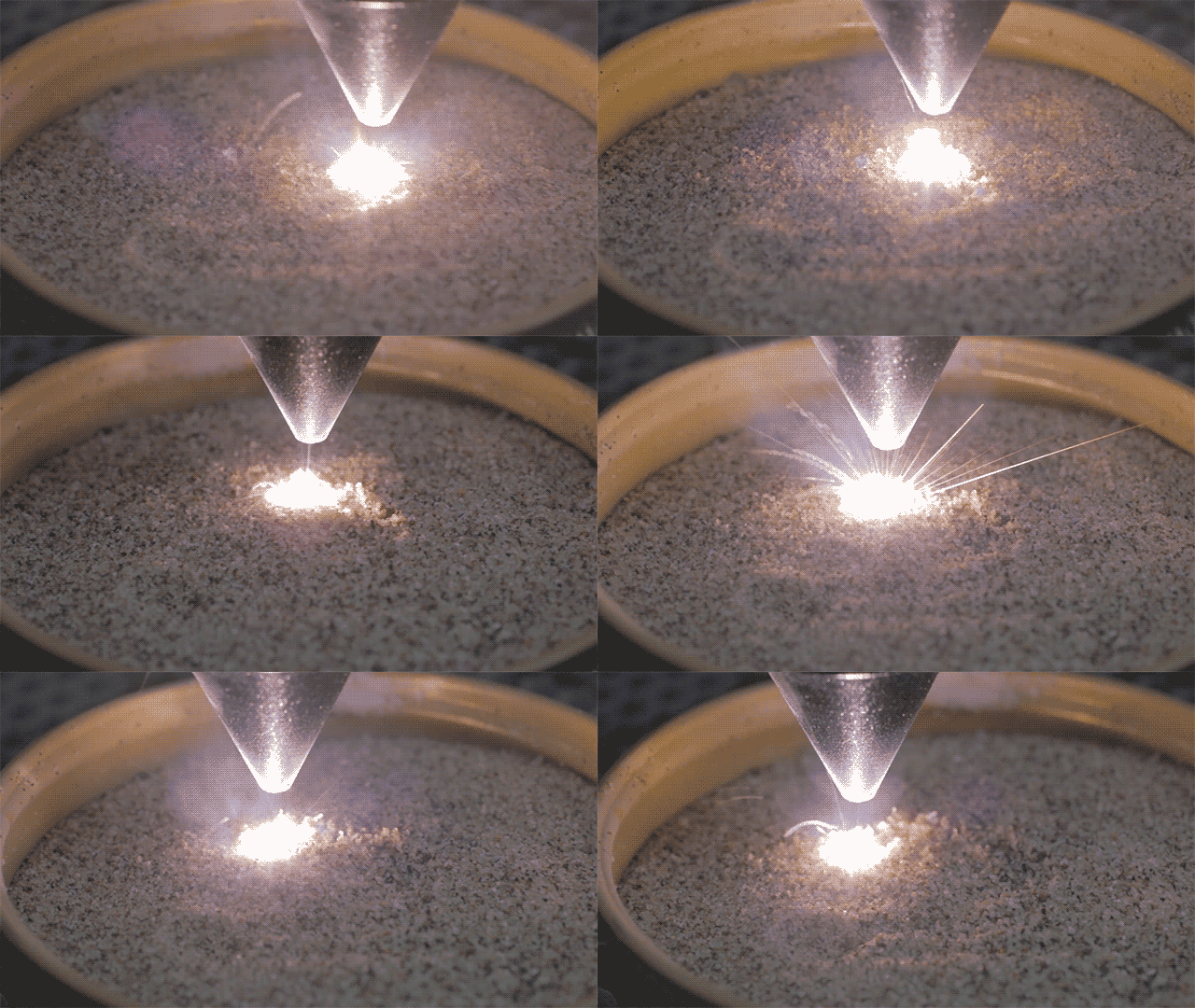
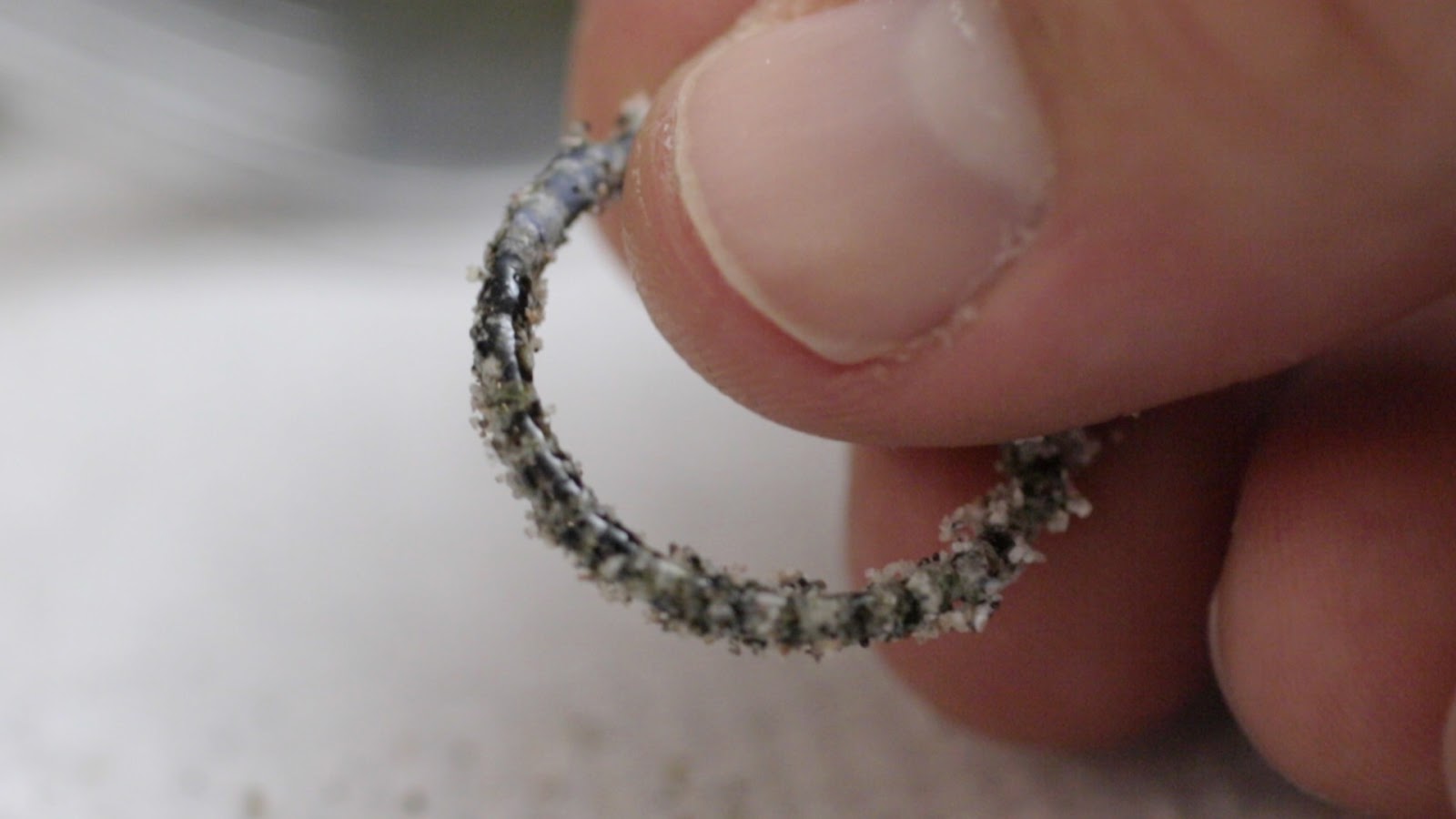
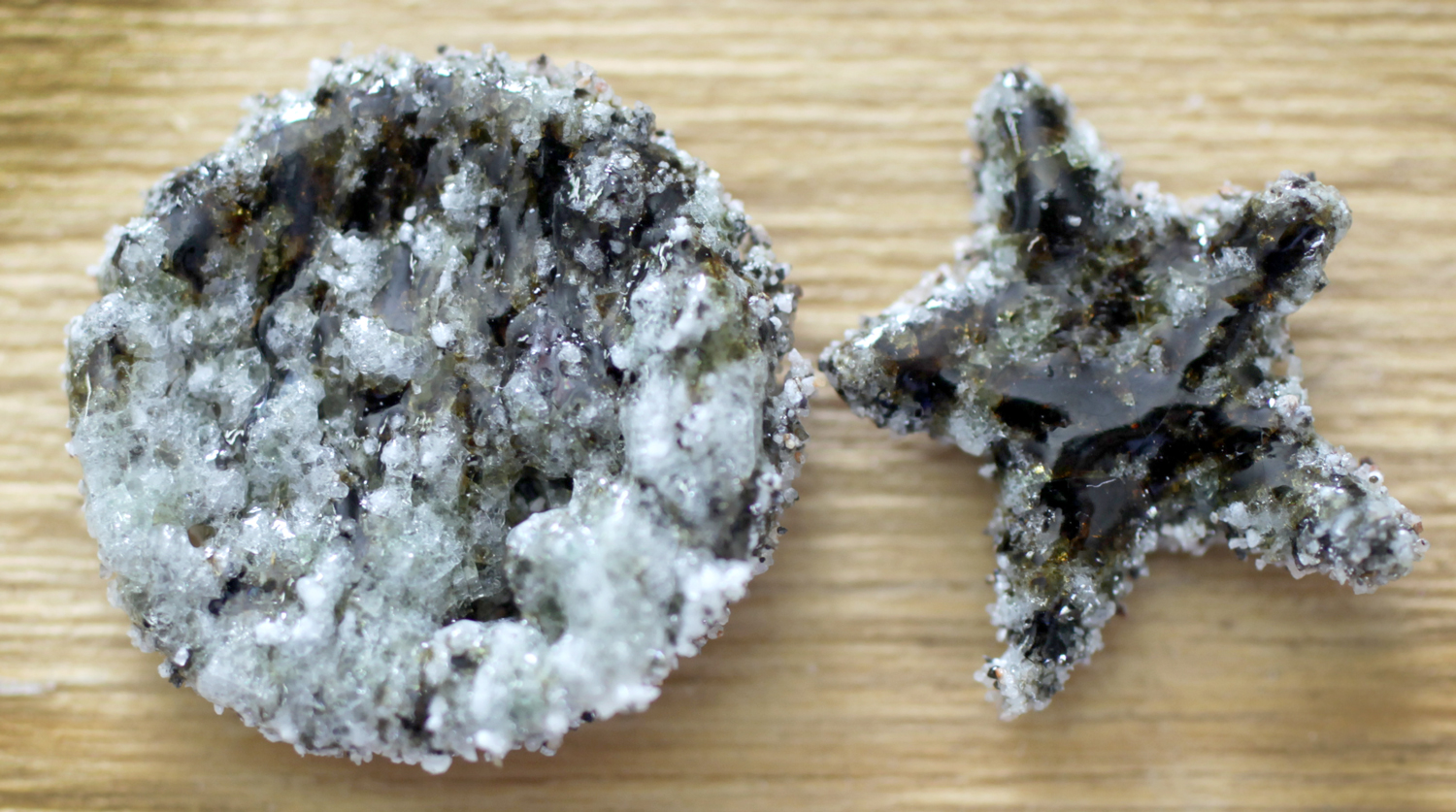
While home 3D printers typical heat/melt plastic to produce objects, Markus Kayser has developed an eco-friendly 3D printer for "desert manufacturing" using only sand as the print material. 
 
The Solar Sinter focuses the heat of the sun to a small point using a large, sun-tracking fresnel lens. The focal point is so hot it almost instantly melts common sand into glass. By moving the platform left and right, the hot spot transforms fine sand into a solid layer. Then by lowering the platform a touch and reapplying a layer of sand, the process repeats to gradually build up any object. 
 
Markus also has developed a solar powered "Sun Cutter" using a similar approach. 
 
The two big advantages of this approach are: It's solar powered - no external electricity required and (mostly) free print material, especially if you're in the desert. That's why we like this project - it may provide a way for desert dwellers to manufacture items without requiring funds for factory produced items. Another plus lies in the form of the print material itself: sand, as a powder, automatically provides support for object overhangs, meaning almost any shape can be produced easily.
 
However, we see some challenges as well: 
 
  • How well will electronics, belts and other mechanical bits stand up against the daunting weather found outdoors in the desert? It may be that such a device could only be used for a short while until it breaks or clogs up. 
  • Where do repair parts come from? Those who own 3D printers today often must repair their device, and sometimes this requires factory parts. 
  • The print resolution will be fairly coarse, depending on the lens. This means that only certain types of crude objects can be printed.
  • The speed of printing is slow, as is typical with 3D printers. This implies that large-volume objects (like interlocking bricks for a construction project, for example) would not likely be feasible.
 
Nevertheless, we think Markus' project is a great start on a new way to provide manufacturing for those in remote areas.  
 
Via Markus Kayser, Vimeo and Ponoko (Hat tip to Charlie)
Sunday
Jun192011

Domes For All

EFFALO's latest dome-building venture is perhaps their most ambitious: they are attempting to create two critical items, bundling them together as domekit.cc: 
 
  • A software tool that uses parametric design to generate a dome design of any desired size
  • A DIY flexible connector for geodesic dome construction
 
We've followed the progress of NYC-based EFFALO for some time, as they've been working on the problem of designing and building geodesic domes using 3D printing tech. Domekit.cc is not quite ready yet, as they've chosen to launch it via a KickStarter project. They're seeking USD$5K by July 1st, so there's not much time to put in your pledge. Pledges are requested in various amounts, and the larger pledges can get themselves an actual geodesic dome, with USD$599 getting you a massive 14.5 foot diameter dome made of 61 connectors and 165 dowels. 
 
Wednesday
May252011

3D Scanning by UAV

You may have guessed we're fascinated with new ways of capturing 3D models for printing, and this week we've found a rather unusual method: UAV images. Researchers at Ecole Polytechnique Fédérale de Lausanne's Computer Vision Laboratory have developed software to combine thousands of images gathered by UAVs into very usable 3D models. 
 
The software, produced by spin-off company Pix4D, enables the creation of very detailed, large-scale 3D map models at very low cost. Images are loaded up to a cloud-based service that interprets them using vision algorithms that mimic human vision processing. Within 30 minutes you will have a completed 3D model in your hands. 
 
Pix4D suggests several applications for this new tech, including the ability for farmers to quickly inspect their crop area by tossing a UAV into the air to fly over their fields and collect images. 
 
We think this could be very useful for producing 3D printable models, too. Look up - that UAV might be capturing your neighborhood! 
 
Wednesday
Apr132011

MIT Looks at Printing Buildings

Architect and MIT professor Neri Oxman has been investigating new techniques for applying 3D printing to the science of building construction. We previously wrote of Neri Oxman's exploits with MaterialEcology, where she leveraged the synergy of computing, ecology, material engineering and design to produce experimental forms. 
 
Now she's investigating the issue of building materials. Today's construction materials are "dumb" in that they are totally uniform in composition, since they must be used to solve arbitrary building problems. But what if the building problem was known? What if the building components could be custom made to precisely suit the physical situation it will become part of? 
 
Imagine girders that have strong areas where they need to be strong, and light in other areas - or even sparse sections with no material at all! Every piece could be specifically made to provide the best physical strength for its particular purpose in the building at the least cost of materials. But how would this work? 
 
... input data about physical stresses on a structure, as well as design constraints such as size, overall shape, and the need to let in light into certain areas of a building. Based on this information, the software applies algorithms to specify how the material properties need to change throughout a structure. 
 
A load-bearing wall could be printed in elaborate patterns that correspond to the stresses it will experience from the load it supports from wind or earthquakes, for instance. 
 
In non-load bearing areas, it could also be possible to print concrete that's so porous that light can penetrate, or to mix the concrete gradually with transparent materials.
 
This is a very different approach to applying 3D printing to building construction; other approaches we've seen generally involve creating a massive concrete-extruding 3D printer to print an entire building at once. Oxman's new approach might be more practical and enable the development of radically different structures, since it can be used as much or as little as desired; an entire building could be built using the technique, or simply one advanced beam in a conventional building. 
 
Tuesday
Aug312010

Design-Worthy Cement Printing

Two years ago we wrote on Contour Crafting's experiments with building-sized 3D printing, in which they were designing a house-sized 3D printer assembly to extrude concrete into shapes suspiciously resembling buildings. The concept is almost unbelievable, where you could erect most of a house at the push of a button (and a few deliveries of fresh cement). We haven't seen many further developments since then in the world of concrete printing other than D-Shape's amazing printed monument
 
However today we ran across Factum Arte and Anish Kapoor, who have been experimenting with cement printing for some years. They're not printing buildings, but instead are focusing on sculptures with a technique that "combines intention with chance and the live properties of the different cement mixes". 
 
Kapoor has published a book detailing the entire process, entitled "Unconformity and Entropy", available right here. From the book:
 
Some three years ago, Adam Lowe and I wondered if it were possible to make a machine that could generate form. The printing machine formed a model for the basis of our thinking. After much trial and error, we found a surprisingly simple way of making a workable engine.
 
Once we had started making objects, a new reality began to emerge. These were objects like no others; they seemed to obscure the border between artifice and event. These are objects that are more akin to natural things than to those made by design.
 
One issue we foresee is the weight; moving tons of cement sculpture could be tricky. In the case of printing an onsite building or monument, weight is less important, but for sculptures you simply must print them on a moveable pallet. 
  
Be sure to watch the videos that show the rather swift cement printer. It reminds us of a room-sized RepRap. Watch out for that Y-axis!