
 Yesterday a series of startling announcements erupted from MakerBot’s Brooklyn NY headquarters, changing the flavor of MakerBot forever. MakerBot announced two new personal 3D printers, the Replicator 2 and Replicator 2X, as well as new software, a service program and a retail operation.
 The announcements appeared to us to take a huge step in a direction first started a year ago, when MakerBot moved away from kits into producing only assembled units.
Let’s examine some of the non-technical things MakerBot did yesterday:
The Rep2 is clearly directed towards professionals, as they call it a “Prosumer” unit, for “scientists, engineers, architects”. Professional uses were mentioned in the announcement videos. Consumers were not explicitly mentioned. Announcement material included prolific explanations of 3D printing for the uninitiated, indicating they’re targeting new clients.
The device looks much more professional. While the time-tested wood case was MakerBot’s long-term trademark, it’s now gone, replaced with black and steel. This is a device you’d want to see on your professional desk, where looks matter more than in your hobby workshop.
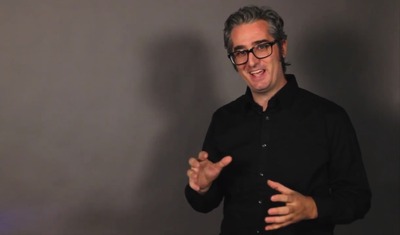
MakerBot produced an extremely slick announcement, including several professional video productions, press releases and online “glossies”. Inevitably the videos featured MakerBot CEO and marketing whiz Bre Pettis, who performed his usual excellent gig explaining the hardware, software in an exciting manner.
The Rep2 may be black steel, but it has has a strong “green” tint. The announcements made prominent mention of the fact that the Rep2 was specifically designed to use PLA – a “renewable bioplastic”. PLA has a lower melting point than ABS, thus less energy is required to heat it up – and the announcement made sure everyone knows the Rep2 absorbs 32% less electrical power than its ABS equivalent. The Rep2 is not black; it’s Green.
MakerBot also announced MakerCare, an optional support service for those requiring a bit more hand-holding when their MakerBot goes south. This has not been offered in the past; instead support was through traditional ticketing systems and user forums. Those support techniques are not always welcomed by professionals. But a visible service package like MakerCare would be attractive to many small professional offices.
Somehow in the midst of all these announcements, MakerBot also snuck in a new retail operation! The MakerBot store, located at 298 Mulberry Street in Brooklyn is now open (just in time for 3D Christmas shopping) where you can obtain Rep2’s, plastic and other associated MakerBot stuff.
What does all this mean? We’ve added it up and it seems pretty clear that MakerBot has taken major steps towards the mainstream market. They even cited statistics in their press release that position them alongside the major industrial makers:
“MakerBot had 16% market share of all 3D printers (industrial and personal) made from 2009 to the end of 2011. In 2011, MakerBot had 21.6% market share.”
The massive cash infusion they obtained one year ago was for a purpose, and now it’s visible to all: Go Big. Really Big.
Via MakerBot
