
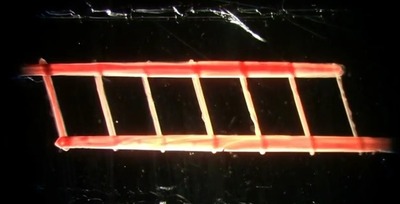
 A new breakthrough in medical 3D printing: researchers at the University of Pennsylvania have developed a method of creating living tissue using 3D printing technology.
 The researchers were concerned with the limitations of current bioprinting techniques, which are able to print layers of living tissue, but are less able to create the necessary vasculature (i.e. blood vessels) that ensure the living tissue stays living.
Their solution is actually quite straightforward: 3D print a “negative” of the desired blood vessels using sugar. This print would represent the spaces through which blood would flow. Then a solution of living cells is poured around the sugary framework. The cells then tend to grow around the sugar structure in the correct positions to assume the shape of the required blood vessels. Finally, the sugar dissolves leaving the tissue and vasculature.
The researchers determined by experiment the correct sugary formulation, which turned out to be a mix of sucrose, glucose and a dash of dextran to ensure solidity. The part we found most interesting was the device they printed the sugary framework with: a modified RepRap open source 3D printer!
This technique could vastly simplify the eventual production of more complex living tissue. But will you be able to do so with your home 3D printer?
