Subscribe


Subscribe by Email. Enter address:

Search

Powered by Squarespace
Sponsors

Recommended
  • Fabricated: The New World of 3D Printing
    Fabricated: The New World of 3D Printing
    by Hod Lipson, Melba Kurman
  • Getting Started with MakerBot
    Getting Started with MakerBot
    by Bre Pettis, Anna Kaziunas France, Jay Shergill
  • Bend, Not Break
    Bend, Not Break
    Portfolio
  • Makers: The New Industrial Revolution
    Makers: The New Industrial Revolution
    by Chris Anderson
  • Makers
    Makers
    by Cory Doctorow
  • 3Dconnexion SpaceNavigator SE (Standard Edition) 3D Navigation Device USB ( 3DX-700028 )
    3Dconnexion SpaceNavigator SE (Standard Edition) 3D Navigation Device USB ( 3DX-700028 )
    3D Connexion
  • Printing in Plastic: Build Your Own 3D Printer (Technology in Action)
    Printing in Plastic: Build Your Own 3D Printer (Technology in Action)
    by James Floyd Kelly, Patrick Hood-Daniel
  • The Homebrew Industrial Revolution: A Low-Overhead Manifesto
    The Homebrew Industrial Revolution: A Low-Overhead Manifesto
    by Kevin A. Carson
« Congress To Ban 3D Printed Weapons? | Main | Lunar 3D Printing? Check! »
Tuesday
Dec112012

Do You Carbomorph?

Carbomorph is a new, experimental material for 3D printing that promises to add a whole new range of capabilities with its ability to embed sensors within 3D printed items. 
 
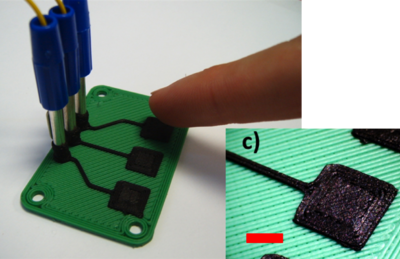
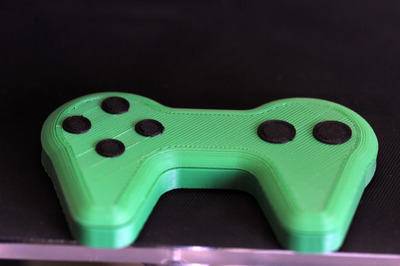
Carbomorph was invented by researchers at the University of Warwick in the UK in their quest to develop a method of 3D printing electronic circuits. So far, they have "used the material to print objects with embedded flex sensors or with touch-sensitive buttons such as computer game controllers or a mug which can tell how full it is."
 
The team created a substance using Carbon Black filler combined with polycaprolactone (PCL) and successfully printed it using a BFB 3000 3D printer. They discovered that the new composite material would change electrical resistance when flexed, leading to the notion of 3D printing sensors. 
 
If this is commercialized (and we suspect it might), those owning a personal 3D printer using plastic extrusion technology could actually print embedded sensors into their objects. We're wondering what kind of devices will be created when this capability is released.