
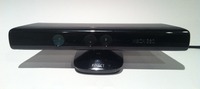
 Developments at MIT by professor Vivek Goyal may lead to very inexpensive and ubiquitous 3D scanning equipment, perhaps even embedded in your mobile phone. A dream for many 3D printer owners is the ability to capture 3D shapes efficiently. Today one must use very expensive 3D scanners or be satisfied with rudimentary solutions such as jury-rigged Microsoft Kinects.
 But Goyal’s work may change things. The problem is to collect distance information for each and every pixel in an image, from which a 3D model can be constructed. Typical solutions of today involve multiple or moving lasers that time light pulses to calculate distances. The MIT team discovered a way to use a single light detector that reduces the number of light pulses by 95%. Adding in some additional mathematics permits resolution of as little as 2mm.
Now, imagine a world where one could quickly capture 3D models just by pointing your mobile phone at a stationary object. An app could quickly send that model off to a 3D print service or perhaps your home 3D printer, thus reproducing the object by the time you get home!
