
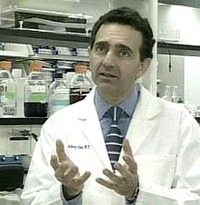
 Wake Forest researcher Dr. Anthony Atala recently spoke on CBC’s science podcast Quirks and Quarks about his work in the almost unbelievable science of engineering organs. His team is actually able to manufacture several types of biological organs. While this is still at the research stage, it could lead to a future where replacement parts for humans are only a few weeks of printing and growing away.
 Atala describes the different techniques for producing organs and tissue, which sound very similar to issues in 3D printing. He says the simplest to produce is flat tissue, such as skin. More complex levels may be tubes, hollow and eventually “solid” organs where a full three dimensional manufacturing process must take place.
While the simpler objects are made using basic scaffolds (which may in fact be 3D printed themselves), the more complex organs are likely to be 3D printed. The process will be quite familiar to 3D printing aficionados: a bucket of “free” cells are cultured and then fed as print material into a bio-compatible 3D printer. The printer lays out the cells and support material in the required pattern. Then after some days or weeks the cells naturally link together and become a true organ. It is likely with multiple print heads you’d be able to produce an organ with multiple types of cells.
While this is still at the research stage, it could lead to a future where replacement parts for humans are only a few weeks of printing and growing away.
