
Sponsors

Recommended
  • Rule 34
    Rule 34
    by Charles Stross

    Stross delves into a possible future where 3D printers become commonplace - and explores the problems that could result. 

  • Printing in Plastic: Build Your Own 3D Printer (Technology in Action)
    Printing in Plastic: Build Your Own 3D Printer (Technology in Action)
    by James Floyd Kelly, Patrick Hood-Daniel
  • 3Dconnexion SpaceNavigator SE (Standard Edition) 3D Navigation Device USB ( 3DX-700028 )
    3Dconnexion SpaceNavigator SE (Standard Edition) 3D Navigation Device USB ( 3DX-700028 )
    3D Connexion
  • The Homebrew Industrial Revolution: A Low-Overhead Manifesto
    The Homebrew Industrial Revolution: A Low-Overhead Manifesto
    by Kevin A. Carson
  • Mastering Blender
    Mastering Blender
    by Tony Mullen
  • Kindle Wireless Reading Device (6
    Kindle Wireless Reading Device (6" Display, Global Wireless, Latest Generation)
    Amazon.com
  • Blender 3D 2.49 Incredible Machines
    Blender 3D 2.49 Incredible Machines
    by Allan Brito
  • Makers
    Makers
    by Cory Doctorow
  • 3Dconnexion SpacePilot PRO - 3D motion controller - 31 button(s) - wired - USB
    3Dconnexion SpacePilot PRO - 3D motion controller - 31 button(s) - wired - USB
    3D Connexion
« Wearable 3D Printed Plants | Main | Name Your Price at Model Labs »
Wednesday
Feb092011

The Ultimate Scanner?

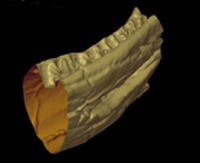
University of Southampton researchers have a new tool available: a high-energy 3D scanner. The design of this scanner is fascinating: it's actually five different scanners in one, each capable of handling different resolution levels. When combined in this integrated system, the scanner is capable of scanning down to an astonishing 200 nanometers. All this within a volume of up to 1 cubic meter. 
 
One of the first items through the new £2.2M scanner was a fossil skull of a prehistoric pliosaur, some 2.4 meters in size. We suspect it took a few runs to capture the beast's head, as the skull was somewhat larger than the scanner's capacity. 
 
The Centre for Computed Tomography director Ian Sinclair says:
 
The scale and design of the scanner means we will be able to x-ray objects as large as a car engine down to something the size of an ant's head.
 
We can't wait to start printing bugs! 
 

Reader Comments

There are no comments for this journal entry. To create a new comment, use the form below.

PostPost a New Comment

Enter your information below to add a new comment.

My response is on my own website »
Author Email (optional):
Author URL (optional):
Post:
 
Some HTML allowed: <a href="" title=""> <abbr title=""> <acronym title=""> <b> <blockquote cite=""> <code> <em> <i> <strike> <strong>
