
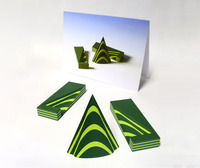
 MCOR’s 3D paper printer created a rather unique design for a Christmas card: a 3D object emerges from the (thick) card when you open it. As you can see in the image, the sheet-built Christmas tree is surrounded by the excess material, which is normally removed and disposed of. However, in this case the “excess” actually forms part of the final design.
 The card was designed in the UK by the Royal College of Art, who showcase the works of their alumni by commissioning a special card each Christmas. This one, as far as we know, is the only one produced by a 3D printer.
We’ve seen this approach before, where support material becomes part of the art. Could this be a design trend in 3D printing?
Via DailyTonic
