
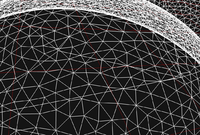
 Experiments are underway to 3D print without using STL, the standard meat and potato file format used by 3D printers worldwide. How can this be? The folks at the RepRap project are trying to use a different approach using CSG format.
 Ok, let’s back up a bit; there are too many acronyms fling around here. STL is an old file format used to store a digital representation of a 3D object. Under the covers it’s simply a gigantically long list of tiny triangles that overlay the intended shape. By having a sufficient number of tiny triangles, you can easily approximate the desired shape.
CSG is different. It represents a 3D object by combining a collection of so-called “primitive objects”. These may be spheres, cubes, or other simple shapes. Complex combinations of them can also represent arbitrary shapes.
So now you’re wondering why change formats? The answer is that STL can very easily introduce incorrect models. Imagine a complete set of triangles surrounding your object. Then remove one of the triangles, creating a “hole” in the model. It’s now an incorrect and unprintable 3D model, because the presence of the hole causes problems when translating the shape into 3D printer instructions.
CSG doesn’t have such issues because it cannot possibly introduce holes, because all CSG models are composed of primitive shapes that have no holes. Adoption of CSG could eliminate this common problem.
But it’s not that simple, as use of CSG is just an experiment at this stage. Building robust CSG interpreters in all 3D printer software is a big deal and likely won’t happen for a while.

what about AMF Additive Manufacturing File Format : goo.gl/7Lq4V ?
what about AMF Additive Manufacturing File Format : goo.gl/7Lq4V ?
Well, csg is a quite old technology. It is good and sound only for simple cad projects. Totally unable to manage any free form kind of modeling. If you want to limit your self to boxes, spheres and cylinders it is adequate, but otherwise definitely no,
Not one of the mainstream modeler (maya, 3dsmax, blender, cinema4d, zbrush, modo, autocad),is based on csg. Guess why…
Csg is adequate for niche applications not for everything.
Well, csg is a quite old technology. It is good and sound only for simple cad projects. Totally unable to manage any free form kind of modeling. If you want to limit your self to boxes, spheres and cylinders it is adequate, but otherwise definitely no,
Not one of the mainstream modeler (maya, 3dsmax, blender, cinema4d, zbrush, modo, autocad),is based on csg. Guess why…
Csg is adequate for niche applications not for everything.