
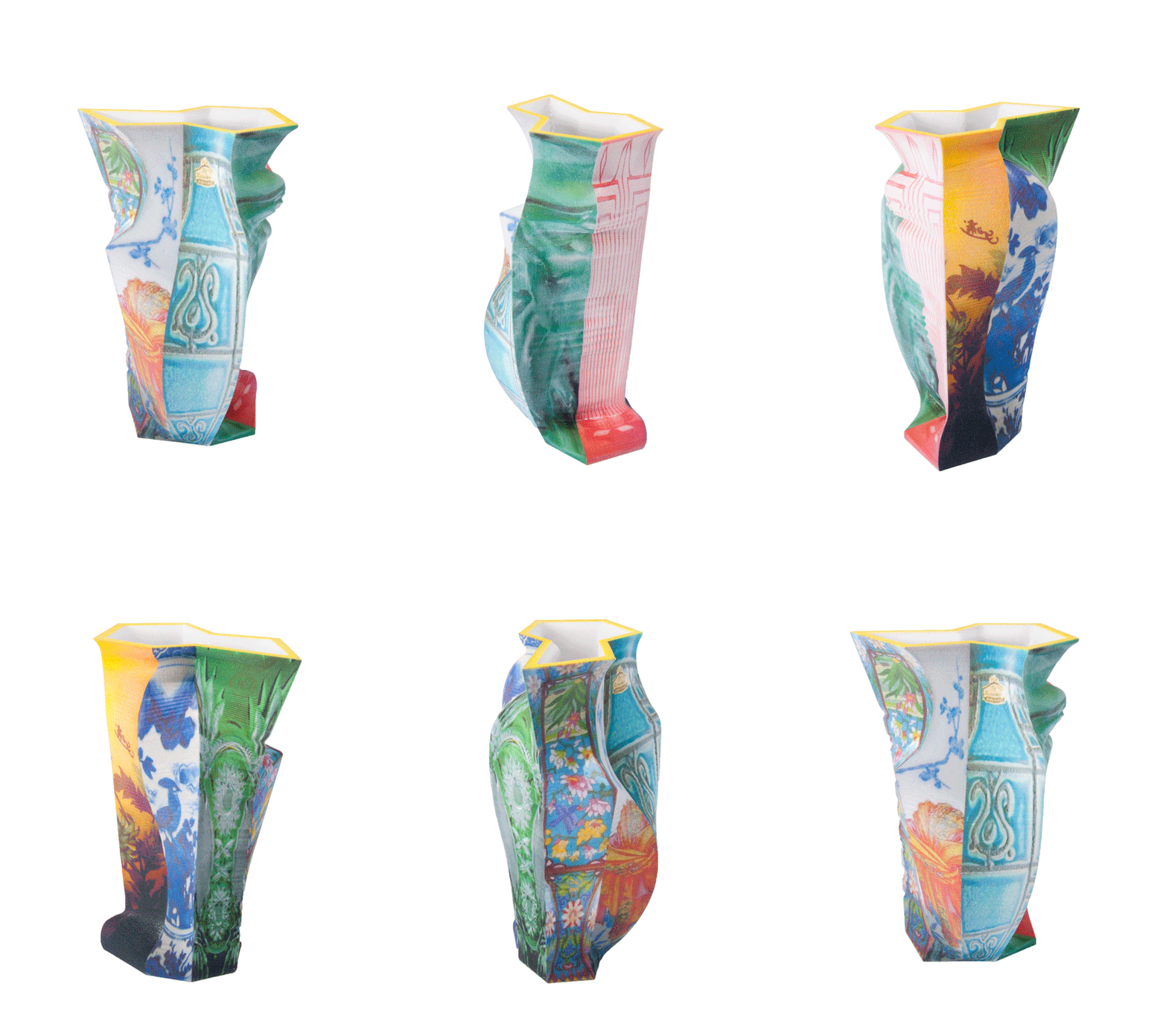
 We’re always interested to find new ways of developing 3D models, be it through software modeling tools, capture through scanning of real objects, physical manifestation of found 3D data, or other techniques. Why? Because you can 3D print them! Now we see artist Daniel Michel of Germany has found yet another way to create digital models: Googling!
 Daniel observed that a vase shape is symmetrical and thus its 3D shape can be sorta-derived from a 2D image. Then he went to work digging through Google Images to find vase images.
By taking a one-eighth vertical slice of eight selected vase images, he was able to compose a new composite vase. He clearly had to do some limited 3D shaping to approximate the real vase’s curves. In the end he created an entirely new mashup vase. It’s called, obviously, the “Google Vase”.
This approach seems to provide a way to create a near-infinite number of new 3D composite objects. We’re wondering two things:
- What other shapes can be composed in this way beyond vases? Faces? Vehicles? Buildings?
- Will the resulting composites be sufficiently interesting and/or beautiful?
The answers are up to you.
Via Daniel Michel and TheNextWeb
