
Sponsors

Recommended
  • Rule 34
    Rule 34
    by Charles Stross

    Stross delves into a possible future where 3D printers become commonplace - and explores the problems that could result. 

  • Printing in Plastic: Build Your Own 3D Printer (Technology in Action)
    Printing in Plastic: Build Your Own 3D Printer (Technology in Action)
    by James Floyd Kelly, Patrick Hood-Daniel
  • 3Dconnexion SpaceNavigator SE (Standard Edition) 3D Navigation Device USB ( 3DX-700028 )
    3Dconnexion SpaceNavigator SE (Standard Edition) 3D Navigation Device USB ( 3DX-700028 )
    3D Connexion
  • The Homebrew Industrial Revolution: A Low-Overhead Manifesto
    The Homebrew Industrial Revolution: A Low-Overhead Manifesto
    by Kevin A. Carson
  • Mastering Blender
    Mastering Blender
    by Tony Mullen
  • Kindle Wireless Reading Device (6
    Kindle Wireless Reading Device (6" Display, Global Wireless, Latest Generation)
    Amazon.com
  • Blender 3D 2.49 Incredible Machines
    Blender 3D 2.49 Incredible Machines
    by Allan Brito
  • Makers
    Makers
    by Cory Doctorow
  • 3Dconnexion SpacePilot PRO - 3D motion controller - 31 button(s) - wired - USB
    3Dconnexion SpacePilot PRO - 3D motion controller - 31 button(s) - wired - USB
    3D Connexion
« $100K For a Better 3D Printer! | Main | 3D Printed Art »
Monday
Feb012010

Test Parts

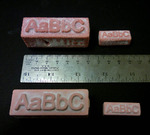
Television has the famous colored Test Pattern. 2D printers have "Test Pages". But what should 3D printers use as the gold standard for testing and comparing output objects?
 
With the recent marketing comparisons of 3D Systems and Objet technology, and now a post from Open3DP, it's seems logical that the industry should develop defacto standard test objects. Open3DP needed to develop a consistent object so that their experiments with various powders could be effective. Who else would need such objects?
 
We believe manufacturers should use standard test objects. Consider the scenario where you're shopping for a printer and you are sent identical test parts printed on each of the candidate printers. You'd be able to perform visual and tactile direct comparison tests. 
 
The standard test object should likely include features that enable comparison of surface quality, sizing accuracy, resolution on all axes, edges, fragility, color and other dimensions. 


Reader Comments

There are no comments for this journal entry. To create a new comment, use the form below.

PostPost a New Comment

Enter your information below to add a new comment.

My response is on my own website »
Author Email (optional):
Author URL (optional):
Post:
 
Some HTML allowed: <a href="" title=""> <abbr title=""> <acronym title=""> <b> <blockquote cite=""> <code> <em> <i> <strike> <strong>
