
Sponsors


Recommended
  • Rule 34
    Rule 34
    by Charles Stross

    Stross delves into a possible future where 3D printers become commonplace - and explores the problems that could result. 

  • Printing in Plastic: Build Your Own 3D Printer (Technology in Action)
    Printing in Plastic: Build Your Own 3D Printer (Technology in Action)
    by James Floyd Kelly, Patrick Hood-Daniel
  • 3Dconnexion SpaceNavigator SE (Standard Edition) 3D Navigation Device USB ( 3DX-700028 )
    3Dconnexion SpaceNavigator SE (Standard Edition) 3D Navigation Device USB ( 3DX-700028 )
    3D Connexion
  • The Homebrew Industrial Revolution: A Low-Overhead Manifesto
    The Homebrew Industrial Revolution: A Low-Overhead Manifesto
    by Kevin A. Carson
  • Mastering Blender
    Mastering Blender
    by Tony Mullen
  • Kindle Wireless Reading Device (6
    Kindle Wireless Reading Device (6" Display, Global Wireless, Latest Generation)
    Amazon.com
  • Blender 3D 2.49 Incredible Machines
    Blender 3D 2.49 Incredible Machines
    by Allan Brito
  • Makers
    Makers
    by Cory Doctorow
  • 3Dconnexion SpacePilot PRO - 3D motion controller - 31 button(s) - wired - USB
    3Dconnexion SpacePilot PRO - 3D motion controller - 31 button(s) - wired - USB
    3D Connexion
« NextFab Conference Brewing | Main | 3D iPhone Covers Now Available »
Sunday
Jan172010

Dental Scanning

We've all been to the dentist (you have gone, haven't you?) and from time to time we need to get replacement teeth or portions thereof. The dentist makes you bite into rubber or plastic moulds to capture the 3D shape of the required parts and then sends it off for custom manufacturing. But Is there a different way to do this?  
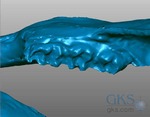
GKS 3D Scanning has an interesting article describing their experience in this area. Here's some of their unique applications:
 
  • The "bite mould" can be laser-scanned to produce a highly accurate 3D model of the required tooth. The 3D model can then be produced on a variety of equipment using different print media. (We strongly recommend staying away from Shapeways Bronze for this application!)
  • Orthodontics can benefit from repeated laser scans that can detail the progress of tooth movement throughout the use of braces and retainers.
  • Toothbrush design can be optimized by 3D scanning many sets of teeth to produce the "average" mouth size and shape.
  • Digital storage of patient's mouth scans take up far less space in the office than the traditional plaster casts.  
  • Archival 3D casts of your teeth provide a model for future repairs when you've lost some of your teeth in a barroom dispute, or simply from nervous tooth-grinding. Just scan again and 3D print the difference. 
 
These ideas and much more can be seen at GKS's website.


Reader Comments (2)

Toothbrush design can be optimized by 3D scanning many sets of teeth to produce the "average" mouth size and shape.

Why produce a toothbrush optimized for the "average" mouth... why not print custom toothbrushes optimized for your mouth?

-S

January 17, 2010 | Unregistered CommenterSean

I wonder if dental scans could also aid in the identification of a skeleton in the same way x-rays are used?

Joseph

PostPost a New Comment

Enter your information below to add a new comment.

My response is on my own website »
Author Email (optional):
Author URL (optional):
Post:
 
Some HTML allowed: <a href="" title=""> <abbr title=""> <acronym title=""> <b> <blockquote cite=""> <code> <em> <i> <strike> <strong>
