
Sponsors


Recommended
  • Rule 34
    Rule 34
    by Charles Stross

    Stross delves into a possible future where 3D printers become commonplace - and explores the problems that could result. 

  • Printing in Plastic: Build Your Own 3D Printer (Technology in Action)
    Printing in Plastic: Build Your Own 3D Printer (Technology in Action)
    by James Floyd Kelly, Patrick Hood-Daniel
  • 3Dconnexion SpaceNavigator SE (Standard Edition) 3D Navigation Device USB ( 3DX-700028 )
    3Dconnexion SpaceNavigator SE (Standard Edition) 3D Navigation Device USB ( 3DX-700028 )
    3D Connexion
  • The Homebrew Industrial Revolution: A Low-Overhead Manifesto
    The Homebrew Industrial Revolution: A Low-Overhead Manifesto
    by Kevin A. Carson
  • Mastering Blender
    Mastering Blender
    by Tony Mullen
  • Kindle Wireless Reading Device (6
    Kindle Wireless Reading Device (6" Display, Global Wireless, Latest Generation)
    Amazon.com
  • Blender 3D 2.49 Incredible Machines
    Blender 3D 2.49 Incredible Machines
    by Allan Brito
  • Makers
    Makers
    by Cory Doctorow
  • 3Dconnexion SpacePilot PRO - 3D motion controller - 31 button(s) - wired - USB
    3Dconnexion SpacePilot PRO - 3D motion controller - 31 button(s) - wired - USB
    3D Connexion
« One Blue Ring | Main | 3D Jobs of the Future »
Thursday
Jan142010

Flying With Objet

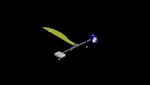
Objet 3D printing technology is being used at the University of Maryland's A. James Clark School of Engineering to produce a Robotic Samara - a micro unmanned aerial system (UAS). The school focuses on advanced propulsion, composites and hypersonics for potential alternate modes of flight for military applications:
 
Micro/Nano Unmanned Aerial Systems (UAS) are an emerging class of vehicles uniquely suited to performing covert missions. Autonomy is an essential aspect of the intended function of UAS, and development of a dynamic model will enable control and state estimation algorithm synthesis. 
 
The 3D printing technology permitted very rapid turnaround of numerous prototypes, making the development process significantly faster (and cheaper, too). This was necessary as the project sought a unique flight mode based on nature:
 
To that end, a linear model for the heave dynamics of a mechanical samara (winged seed) in hovering flight was identified from data collected external to the vehicle by a visual tracking system. 
 
That's right - they mimicked the aerodynamics of Maple tree seeds. One can imagine the amount of trial and error involved in this venture - and how effective quick 3D prints would be as different designs were repeatedly attempted. 
Via UofMaryland and Product Design & Development (Hat tip to Rachel)

 

Reader Comments

There are no comments for this journal entry. To create a new comment, use the form below.

PostPost a New Comment

Enter your information below to add a new comment.

My response is on my own website »
Author Email (optional):
Author URL (optional):
Post:
 
Some HTML allowed: <a href="" title=""> <abbr title=""> <acronym title=""> <b> <blockquote cite=""> <code> <em> <i> <strike> <strong>