
Sponsors

Recommended
  • Rule 34
    Rule 34
    by Charles Stross

    Stross delves into a possible future where 3D printers become commonplace - and explores the problems that could result. 

  • Printing in Plastic: Build Your Own 3D Printer (Technology in Action)
    Printing in Plastic: Build Your Own 3D Printer (Technology in Action)
    by James Floyd Kelly, Patrick Hood-Daniel
  • 3Dconnexion SpaceNavigator SE (Standard Edition) 3D Navigation Device USB ( 3DX-700028 )
    3Dconnexion SpaceNavigator SE (Standard Edition) 3D Navigation Device USB ( 3DX-700028 )
    3D Connexion
  • The Homebrew Industrial Revolution: A Low-Overhead Manifesto
    The Homebrew Industrial Revolution: A Low-Overhead Manifesto
    by Kevin A. Carson
  • Mastering Blender
    Mastering Blender
    by Tony Mullen
  • Kindle Wireless Reading Device (6
    Kindle Wireless Reading Device (6" Display, Global Wireless, Latest Generation)
    Amazon.com
  • Blender 3D 2.49 Incredible Machines
    Blender 3D 2.49 Incredible Machines
    by Allan Brito
  • Makers
    Makers
    by Cory Doctorow
  • 3Dconnexion SpacePilot PRO - 3D motion controller - 31 button(s) - wired - USB
    3Dconnexion SpacePilot PRO - 3D motion controller - 31 button(s) - wired - USB
    3D Connexion
« DAVID-laserscanner … in a Box! | Main | 3D CSI »
Monday
Sep282009

Glass Printing


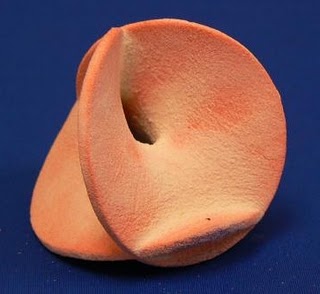
We've seen many different materials being used as the print medium for 3D printers, including the obvious (titanium, wax, plastic) and a few rather bizarre ones (paper, nutella, pasta and sugar), but we haven't really noticed Glass yet. Until now.

According to PhysOrg.com news:

A team of engineers and artists working at the University of Washington's Solheim Rapid Manufacturing Laboratory has developed a way to create glass objects using a conventional 3-D printer. The technique allows a new material to be used in such devices.

The key to the new Vitraglyphic process was the realization that if a material could be powdered to less than 20 microns in diameter, the material could likely be successfully fed through 3D printers. The glass powder is mixed with a binder and then objects are printed. After printing completes, the object is then fired to fuse the glass bits together.

Via University of Washington and Physorg (Hat tip to Micah!)

Reader Comments

There are no comments for this journal entry. To create a new comment, use the form below.

PostPost a New Comment

Enter your information below to add a new comment.

My response is on my own website »
Author Email (optional):
Author URL (optional):
Post:
 
Some HTML allowed: <a href="" title=""> <abbr title=""> <acronym title=""> <b> <blockquote cite=""> <code> <em> <i> <strike> <strong>