
Sponsors

Recommended
  • Rule 34
    Rule 34
    by Charles Stross

    Stross delves into a possible future where 3D printers become commonplace - and explores the problems that could result. 

  • Printing in Plastic: Build Your Own 3D Printer (Technology in Action)
    Printing in Plastic: Build Your Own 3D Printer (Technology in Action)
    by James Floyd Kelly, Patrick Hood-Daniel
  • 3Dconnexion SpaceNavigator SE (Standard Edition) 3D Navigation Device USB ( 3DX-700028 )
    3Dconnexion SpaceNavigator SE (Standard Edition) 3D Navigation Device USB ( 3DX-700028 )
    3D Connexion
  • The Homebrew Industrial Revolution: A Low-Overhead Manifesto
    The Homebrew Industrial Revolution: A Low-Overhead Manifesto
    by Kevin A. Carson
  • Mastering Blender
    Mastering Blender
    by Tony Mullen
  • Kindle Wireless Reading Device (6
    Kindle Wireless Reading Device (6" Display, Global Wireless, Latest Generation)
    Amazon.com
  • Blender 3D 2.49 Incredible Machines
    Blender 3D 2.49 Incredible Machines
    by Allan Brito
  • Makers
    Makers
    by Cory Doctorow
  • 3Dconnexion SpacePilot PRO - 3D motion controller - 31 button(s) - wired - USB
    3Dconnexion SpacePilot PRO - 3D motion controller - 31 button(s) - wired - USB
    3D Connexion
« Shapeways Lowers Media Pricing | Main | Sony Ericsson's 3D Printing Habits »
Tuesday
Apr072009

Stone-Age 3D Printing!

 
There's always complaints about the price of 3D print media, as exhibited in our comments in recent days. People say it's not the cost of the printer that matters, it's the ongoing cost of the media! But today there's a light at the end of the tunnel.

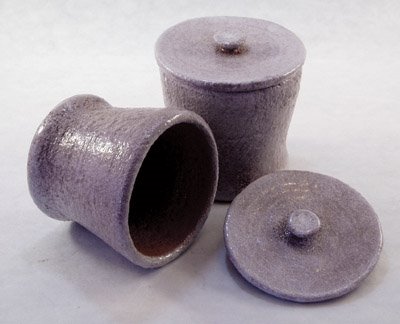
Mark Ganter, University of Washington Engineering professor, sought a way to enable his students to do more with 3D printing. The barrier was cost: at $30-50 per pound, the cost over the school year was adding up to prohibitive amounts. The last thing a professor wants to do is put limits on the ingenuity of his students. So, Ganter did what anyone in his position would do: invent a new media that is dramatically lower in price.

Over the course of six months of experimentation, Ganter and team developed a mix of ceramic powder, sugar and maltodextrin! The resulting powder is extremely inexpensive as its ingredients are commonly available anywhere in large quantities. Objects made from the powder can be fired like traditional ceramics. The team continues to experiment with different mixes for other purposes.

In the spirit of open source, Ganter has published the actual recipes for anyone to use! Enjoy!

Caution: use of said homemade powder likely pulverizes the warranty on your printer.

Via CeramicArtsDaily and PhysOrg (Hat tip to Charlie Holden and Timothy Wilson!)

Reader Comments

There are no comments for this journal entry. To create a new comment, use the form below.

PostPost a New Comment

Enter your information below to add a new comment.

My response is on my own website »
Author Email (optional):
Author URL (optional):
Post:
 
Some HTML allowed: <a href="" title=""> <abbr title=""> <acronym title=""> <b> <blockquote cite=""> <code> <em> <i> <strike> <strong>