
Sponsors

Recommended
  • Rule 34
    Rule 34
    by Charles Stross

    Stross delves into a possible future where 3D printers become commonplace - and explores the problems that could result. 

  • Printing in Plastic: Build Your Own 3D Printer (Technology in Action)
    Printing in Plastic: Build Your Own 3D Printer (Technology in Action)
    by James Floyd Kelly, Patrick Hood-Daniel
  • 3Dconnexion SpaceNavigator SE (Standard Edition) 3D Navigation Device USB ( 3DX-700028 )
    3Dconnexion SpaceNavigator SE (Standard Edition) 3D Navigation Device USB ( 3DX-700028 )
    3D Connexion
  • The Homebrew Industrial Revolution: A Low-Overhead Manifesto
    The Homebrew Industrial Revolution: A Low-Overhead Manifesto
    by Kevin A. Carson
  • Mastering Blender
    Mastering Blender
    by Tony Mullen
  • Kindle Wireless Reading Device (6
    Kindle Wireless Reading Device (6" Display, Global Wireless, Latest Generation)
    Amazon.com
  • Blender 3D 2.49 Incredible Machines
    Blender 3D 2.49 Incredible Machines
    by Allan Brito
  • Makers
    Makers
    by Cory Doctorow
  • 3Dconnexion SpacePilot PRO - 3D motion controller - 31 button(s) - wired - USB
    3Dconnexion SpacePilot PRO - 3D motion controller - 31 button(s) - wired - USB
    3D Connexion
« Open Manufacturing | Main | Metropolitan Works Exhibits »
Monday
Feb092009

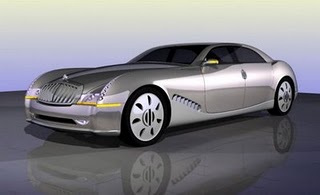
DiMora's V16 Engine Powered By 3D Printer

 
Admit it - you need a 1200-HP car, just like us. But now they're being made much more efficiently due to the use of ProMetal's "Rapid Casting Technology", which can build molds and casting cores of sand directly from 3D models.

DiMora Motors is using this new approach to build the startling 1200-HP motor on their new USD$2M Natalia SLS 2 sport luxury sedan.

The new process appears to be a variation of 3D printing with a different media: sand! Of course, the final engine is not 3D printed, but its casts and molds were. According to the press release:

According to Dan Maas, Director of Business Development for ProMetal, “This revolutionary ProMetal RCT process allows design freedoms, heretofore never available to the casting designer or the foundry. Removing the requirements for parting lines, draft angles and providing undercuts is just the tip of the iceberg,” asserted Maas. “Providing nested cores, spiral vents, volute shapes, integration of multiple components, in-situ cores, and unique rigging geometry to minimize turbulence are design features that are being utilized today by advanced companies.”

One wonders what things may happen when engine designers catch on and begin traveling through a design space with far fewer restrictions.

Vroom!

Via PRLog

Reader Comments (1)

Great stuff from you, man. Ive read your stuff before and you're just too awesome. I love what you've got here, love what you're saying and the way you say it. You make it entertaining and you still manage to keep it smart. I cant wait to read more from you. This is really a great blog.Happy New Year 2011

December 31, 2010 | Unregistered Commenterkarmaloop rep code

PostPost a New Comment

Enter your information below to add a new comment.

My response is on my own website »
Author Email (optional):
Author URL (optional):
Post:
 
Some HTML allowed: <a href="" title=""> <abbr title=""> <acronym title=""> <b> <blockquote cite=""> <code> <em> <i> <strike> <strong>