
Sponsors

Recommended
  • 3Dconnexion SpaceNavigator SE (Standard Edition) 3D Navigation Device USB ( 3DX-700028 )
    3Dconnexion SpaceNavigator SE (Standard Edition) 3D Navigation Device USB ( 3DX-700028 )
    3D Connexion
  • The Homebrew Industrial Revolution: A Low-Overhead Manifesto
    The Homebrew Industrial Revolution: A Low-Overhead Manifesto
    by Kevin A. Carson
  • Mastering Blender
    Mastering Blender
    by Tony Mullen
  • Kindle Wireless Reading Device (6
    Kindle Wireless Reading Device (6" Display, Global Wireless, Latest Generation)
    Amazon.com
  • Blender 3D 2.49 Incredible Machines
    Blender 3D 2.49 Incredible Machines
    by Allan Brito
  • Makers
    Makers
    by Cory Doctorow
  • 3Dconnexion SpacePilot PRO - 3D motion controller - 31 button(s) - wired - USB
    3Dconnexion SpacePilot PRO - 3D motion controller - 31 button(s) - wired - USB
    3D Connexion
  • Making it Big in Software: Get the Job. Work the Org. Become Great.
    Making it Big in Software: Get the Job. Work the Org. Become Great.
    by Sam Lightstone
« Glossy 3D Printing? | Main | Romantic 3D Printing »
Monday
Nov232009

The EBF3 Business Case


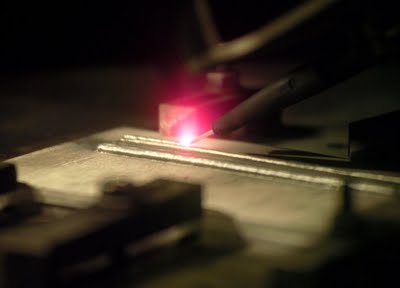
We wrote a few weeks ago about NASA's new EBF3 manufacturing process (Electron Beam FreeForm Fabrication), which uses a high-energy electron beam to melt raw metal (typically aluminum) and deposit it on a vacuum-encased rotating platform. Shiny round metal objects soon emerge.

Now we learn a bit more about the benefits of EBF3, which originally was intended for use on the International Space Station, where the intention is to print parts as you need them instead of rocketing up tons of spare parts at great expense that might never be required.

The real business case turns out to be in the aircraft industry. According to Science Daily a typical aircraft part might require milling of a 6,000 lb. chunk of titanium to reveal a 300 lb. part. With EBF3 you need only print 350 lbs. of raw part and trim off 50 lbs for finishing. That's a big saving in not only the titanium but also in the work effort, electrical power and cutting fluid.

It's not rapid prototyping; it's rapid manufacturing. How's that for a space spin-off?

Via Science Daily (Hat tip to Micah)
Image credit: NASA

Reader Comments (1)

Great stuff! Check out Sciaky's approach to Direct Manufacturing, which utilizes EBF3 technology:

http://www.youtube.com/watch?v=KctVsdc1ceI

November 25, 2009 | Unregistered CommenterJay

PostPost a New Comment

Enter your information below to add a new comment.

My response is on my own website »
Author Email (optional):
Author URL (optional):
Post:
 
Some HTML allowed: <a href="" title=""> <abbr title=""> <acronym title=""> <b> <blockquote cite=""> <code> <em> <i> <strike> <strong>