
Sponsors

Recommended
  • 3Dconnexion SpaceNavigator SE (Standard Edition) 3D Navigation Device USB ( 3DX-700028 )
    3Dconnexion SpaceNavigator SE (Standard Edition) 3D Navigation Device USB ( 3DX-700028 )
    3D Connexion
  • Mastering Blender
    Mastering Blender
    by Tony Mullen
  • Kindle Wireless Reading Device (6
    Kindle Wireless Reading Device (6" Display, Global Wireless, Latest Generation)
    Amazon.com
  • Blender 3D 2.49 Incredible Machines
    Blender 3D 2.49 Incredible Machines
    by Allan Brito
  • Makers
    Makers
    by Cory Doctorow
  • 3Dconnexion SpacePilot PRO - 3D motion controller - 31 button(s) - wired - USB
    3Dconnexion SpacePilot PRO - 3D motion controller - 31 button(s) - wired - USB
    3D Connexion
« Finish it with Metal | Main | The Metal Process - Revealed! »
Monday
12Oct2009

EBF3: Electron Beam Freeform Fabrication


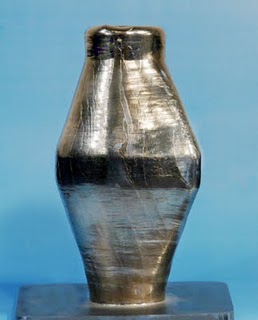
Electron Beam Freeform Fabrication is yet another approach for 3D printing, this time developed by the rocket scientists at NASA. They have good reasons for developing EBF3: to save weight on cargo flights to the International Space Station. You can imagine the hefty pile of spare parts that must be carried up yonder and stored somewhere inside a cardboard box in the attic of the ISS. Why carry and store parts when you could print them whenever you need them?

EBF3 is straightforward to understand. A metal feedstock (aluminum is apparently ideal) is heated and fed to a print head that traverses a rotating build platform. We're wondering about the rotating bit: good for making round objects, not so good for those with straight edges. Perhaps most space station parts are usually round? In any case, EBF3 also can handle two different feedstocks simultaneously, permitting custom alloy printing or having two different materials within the object. One interesting aspect is that EBF3's build chamber is a vacuum. Easy to find at ISS, less so around here.

We suspect EBF3 will eventually be known as one of NASA's spin-offs, where Earth-bound companies take on the technology and produce commercial products with it. Perhaps it may even be used by one of the leading 3D Printer manufacturers?

Via NASA

Reader Comments (1)

You left out one interesting problem for EBF3 on the International Space Station: It has to work in zero-gravity or a centrifuge.

That has to be one hell of an engineering constraint to work with.

-S

October 14, 2009 | Unregistered CommenterSean

PostPost a New Comment

Enter your information below to add a new comment.

My response is on my own website »
Author Email (optional):
Author URL (optional):
Post:
 
Some HTML allowed: <a href="" title=""> <abbr title=""> <acronym title=""> <b> <blockquote cite=""> <code> <em> <i> <strike> <strong>