
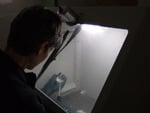
 3D printing is being used to manufacture custom objects for psychological experiments. The shapes are of typical objects, but they are not robust enough for normal use, since most 3D printers today cannot produce objects of sufficient strength. However, the psychological experiment involves subjects merely touching the objects to identify them by shape. This use avoids the strength problem and permits great flexibility in creating shapes for use in the experiments. Also, note picture of the wash-up chamber that’s used to get rid of deposition residue.
Via Freesteel
